A Rainy Afternoon Built Around One Question
A rainy afternoon travel plan pairs one sheltered route with a focused indoor visit, so you can enjoy the day without rushing between attractions.
The common mistake on a rainy travel afternoon is to hurry from one indoor attraction to the next, spending the day damp and arriving home with a blur of rooms. A rainy afternoon travel plan works better when you choose a subject that draws your attention, then let the weather slow the pace rather than dictate a packed itinerary.
Pick a question with a clear connection to the place: How did this neighborhood adapt to the river? Which materials appear in its older buildings? Where do local crafts turn up in everyday objects? The question is a reason to look more closely, not a riddle you must solve before dinner.
Choose a question with a local foothold
Start with a feature you can reach without crossing the whole city. From a sheltered street, you might see an arcade, a harbor wall, old shop signs, or a steep lane. Choose a question that relates to something visible nearby, then find one indoor place that can add context.
Keep the subject specific enough to guide your choices. “What does this city value?” could lead anywhere. “How have shops used this covered passage?” gives you something to look for in a local history display, a building, or the businesses along the route.
Check opening hours, entry arrangements, and the route on a local map before leaving. Choose one main indoor stop and a nearby place to warm up or dry off. A small museum, historic house, covered market, or public library with local-history materials may fit. Check venue rules and local conditions that could affect your plans.
Let the route leave room for rain
Plan a loose sequence, not a timetable. Leave space for wet crossings, a delayed bus, or a longer pause than expected. If the sidewalks are slick or the rain gets heavy, shorten the outdoor portion and use a nearby sheltered route instead.
- Check the conditions. Look at the local forecast and identify a sheltered route. If the walk feels unpleasant or unsafe, take transit or go straight to the indoor stop.
- Notice a feature on the way. Look for one detail connected to your question, such as a drain channel, an old sign, or a covered entrance. If nothing relevant stands out, do not force a connection; begin at the venue instead.
- Visit one place at your own pace. Read the labels, maps, or displays that speak to your subject. If the collection does not help, shift to what it actually shows rather than stretching it into an answer.
- Take a comfortable pause. Choose a nearby café, library, or covered public space. If it is crowded or uncomfortable, find another suitable place or head back.
- Keep a record of the experience. Note a specific detail and where you encountered it. If you would rather not write, take a permitted photo or simply remember the detail without turning the afternoon into homework.
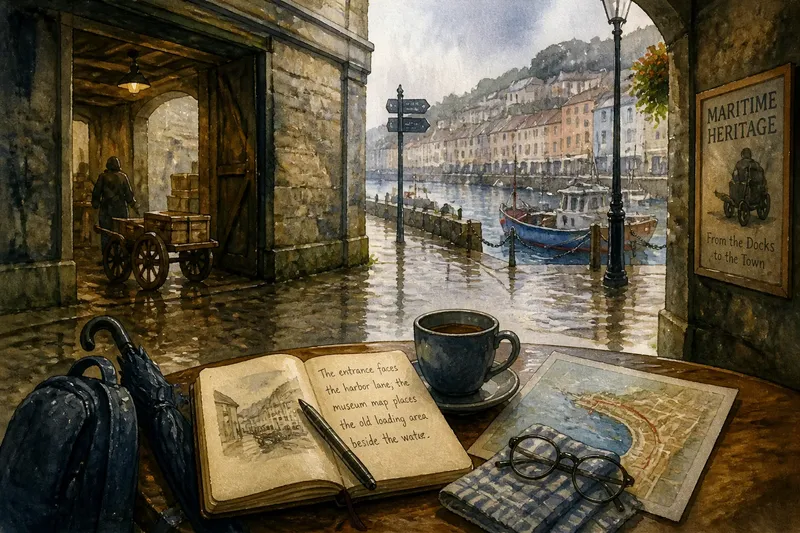
Say you are in a coastal town, and—using invented details—you wonder how people have moved goods around the harbor. You first notice a covered loading entrance beside a lane, then visit a small maritime museum where a map marks the old waterfront and a display shows handcarts used near the docks. At a nearby café, you write, “The entrance faces the harbor lane; the museum map places the old loading area beside the water.” The note gives you a grounded comparison, but it does not claim to explain how every resident worked.
Use the visit to understand a place, not to cover it
You do not have to see every room. Choose a few objects, photographs, or maps that connect to your subject, and give them your attention. A tool may point to a material people worked with; a household object may show how a room was used; a map may make the influence of a river or hillside easier to see.
Read a label, then look back at the object. Notice what the text explains and what remains visible without it: wear on a handle, a repair, a placement beside another object. A display can suggest a line of inquiry without giving a complete account of local life.
Keep claims close to what you encountered. If one exhibit describes a craft tradition, write that the museum presented it that way; do not turn one display into a statement about everyone in town. That distinction makes a travel note more trustworthy and more useful later.
Make the pause part of the afternoon
A pause is not wasted time between attractions. A warm café seat, a library reading room, or a sheltered bench can give your attention a chance to settle. Pick a place close enough that getting there does not become another wet expedition.
If the visit has changed your question, let it change. A display about boats may point you toward the people who repaired them; a map may raise questions about who lived beside the waterfront. You can leave those questions for another day rather than chasing each one through the rain.
It is not worth crossing town in heavy rain just to squeeze in a second attraction because it appears on a list. Go if it is nearby and genuinely interests you; otherwise, the extra trip may take more from the afternoon than it adds.
What should you bring, and what if plans change?
What should I carry for a rainy afternoon?
Bring a compact umbrella or rain shell, a small notebook or notes app, and a pen that writes on ordinary paper. A cloth can help clear rain from glasses or a phone screen, so you can see comfortably indoors.
What if the museum is closed?
Keep your subject and choose another place that may offer context, such as a public library, covered market, or local gallery. If none fits, observe a sheltered stretch of street and stick to details you can actually see.
How much should I write?
A sentence or two can preserve a specific detail and where you saw it. If the note starts making a broad claim, replace it with the object, display, or street feature that prompted the thought.
Should I take photos as well?
Take a photo if the venue permits it and the image will help you remember a detail. A short note can add why you noticed it, which a picture may not capture.
Choose what the rest of the day needs?
How do I keep the plan flexible?
Choose one main indoor stop and a nearby place to pause, then leave the rest open. If rain or fatigue makes the route less appealing, shorten it rather than treating the plan as an obligation.
What if my question has no clear answer?
That is fine: record what the visit showed and what it left unresolved. A museum display or a walk offers a partial view, not a complete account of a place.
How can I make the afternoon feel worthwhile?
Choose one part of the place to pay attention to, such as a passage, a collection, or the edge of a harbor. If you leave with a sharper sense of that detail, the afternoon has done its job without requiring another stop.
Leave with a detail that belongs to the place
Before you leave your pause, read your note and check that it names something you actually saw: a map, an object, a sound, or a feature of the street. “The museum places small working boats beside a map of the waterfront” stays close to an encounter; “This town has always depended on boats” reaches beyond what one afternoon can tell you.
Then decide whether to head back, take a short sheltered walk, or continue with your ordinary plans. A rainy afternoon travel plan does not need to produce a polished story on the spot. If you keep the visit modest and the details specific, you can carry a more distinct impression of the place into the rest of your day.